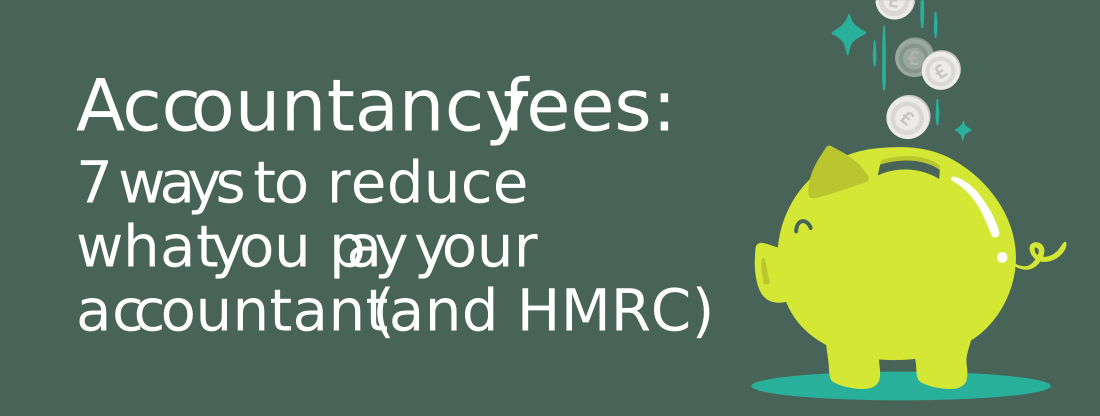
Accountancy Fees: 7 Proven Ways to Lower Your Accounting Costs (and Your HMRC Bill)
Looking to reduce your accountancy fees? You’re not alone. Every business owner wants to keep operational overheads lean while keeping profit margins healthy.
It might feel unusual getting advice on how to pay less for accounting services directly from an accounting firm. But the truth is simple: when your financial records are organised, automated, and compliant, we spend less time fixing messy data and those savings are passed directly on to you.
Below, we’ve outlined 7 practical ways to minimise what you pay your accountant and avoid unnecessary HMRC tax penalties.
1. Are you using accounting software and other time-saving tools?
If you are still tracking finances using manual spreadsheets or desktop software, you’re likely paying higher fees than necessary. Discrepancies in spreadsheets mean your accountant must spend billable hours checking and reconciling unmatched figures.
Moving to cloud accounting software like Xero or Sage streamlines data collection dramatically:
- Live Bank Feeds: Bank transactions flow directly into your software, cutting down manual bookkeeping.
- Making Tax Digital (MTD) Readiness: Cloud platforms automatically align with HMRC’s digital requirements, reducing submission errors.
- Partner Software Benefits: Most established accountancy firms are certified software partners and can help set up your system efficiently.
Bonus Efficiency Stack: Ask your accountant if they recommend complementary apps. Tools like Dext or AutoEntry handle receipt scanning effortlessly, while Harvest (time-tracking) and BrightHR keep core administrative tasks seamless. Automating document capture ensures zero missing invoices when year-end rolls around.
2. Allocate responsibilities between yourself and your accountant
Accountants charge for expert time. If you hand over unorganised receipts, unreconciled bank entries, or incomplete bookkeeping, you pay specialist rates for basic administrative cleanup.
Who Should Handle What?
| Task | Who Should Handle It? | Why? |
|---|---|---|
| Day-to-day invoicing & receipt collection | You (or internal team) | Straightforward routines easily managed on a mobile app. |
| Self-assessment prep & initial matching | Collaborative | You categorise basic transactions; flag complex items for review. |
| Statutory accounts, tax filings & planning | Your Accountant | Requires expert tax knowledge, legal compliance, and sign-off. |
Working out what you can handle internally allows your business accountants to focus strictly on tasks that require expert guidance rather than routine maintenance.
3. Are you paying extra for tax advice you don’t need?
UK tax legislation is famously detailed. Some firms bundle high-level tax consulting into basic monthly fees as a tactic to justify higher overall charges.
- Standard Operations: Routine compliance, annual tax returns, and basic allowable expense checks should be integrated seamlessly into your standard accounting service.
- Specialist Restructuring: If your business requires complex corporate restructuring or specialised tax relief claims (such as R&D tax credits), ensure you pay for specialist tax teams only as and when required.
4. Respond quickly to information requests from your accountant
When preparing year-end accounts, a missing receipt or unverified invoice halts progress.
If an accountant must pause work, revisit your files weeks later, and repeatedly chase documentation, it adds unnecessary administrative time. Responding promptly to requests keeps your file moving smoothly and prevents extra billable hours.
5. Proactive advice minimises your tax bill and lowers fees
Reactive accounting looks back at figures many months after your financial year ends. Proactive accounting anticipates potential issues and resolves them before HMRC steps in.
Example: Overdrawn Director’s Loan Accounts
If you extract funds from your business that are not categorised as salary or dividends, it creates an overdrawn Director’s Loan Account.
- The Risk: Leaving this unpaid past your tax deadline can trigger additional tax charges (Section 455 tax).
- The Solution: A proactive accountant spots overdrawn positions early, helping you structure repayments or declare legal dividends well before HMRC deadlines.
6. Are you paying for meetings that you don’t need?
End-of-year meetings were once a standard routine, but many serve little practical purpose beyond filling a calendar.
If your financial reports are straightforward and performance aligns with expectations, a clear email breakdown or concise digital summary often achieves the exact same result in far less time. Save face-to-face advisory time for major business decisions or long-term tax strategy.
7. Avoid leaving year-end accounts to the last minute
Leaving year-end accounts until the final weeks before filing deadlines creates unnecessary stress and limits tax-minimisation opportunities.
Organising your financial records early allows your accountant to identify allowable expense deductions and tax planning options before the tax year closes. It also eliminates the risk of missing statutory deadlines for Companies House and HMRC, helping you avoid late filing penalties altogether.
Recap: Keeping your accountancy costs down
- Embrace cloud technology: Move away from spreadsheets to dedicated accounting software with automated bank feeds.
- Clarify responsibilities: Manage routine tasks internally so your accountant focuses on high-value compliance and advice.
- Communicate promptly: Supply missing documentation quickly to avoid administrative delays.
- Prepare early: Organise your records months ahead of deadlines to unlock proactive tax planning opportunities.
Frequently Asked Questions
How can a small business choose the right accounting service level?
Determine the volume of transactions you handle each month and evaluate how much time you can realistically dedicate to bookkeeping. A tailored setup where you manage day-to-day entries and an accountant handles statutory filings is usually the most cost-effective approach.
Can I switch accountants if I am unhappy with my current setup?
Yes. Switching accountants in the UK is a straightforward process. Your new accounting firm will issue a formal Professional Clearance Request (Etiquette letter) to your existing provider to transfer your financial records smoothly.