Why Being In The Red Is A Good Thing
In traditional business thinking, “being in the red” is treated as an immediate red flag. Standard end-of-year accountants often shudder at the thought of a business borrowing money or operating with a negative bank balance. However, from a strategic management accounting perspective, operating in the red isn’t always a sign of failure—when managed correctly, strategic leverage is one of the most powerful catalysts for commercial expansion.
At MNE Accounting, we regularly meet business owners whose fear of debt severely stunts their growth. Understanding the difference between dangerous insolvency and calculated working capital deployment can be the catalyst that transforms a stagnant business into a scaling enterprise.
Case Study: Strategic Leverage in Action
Consider a bar group owner we worked with who operated four generally profitable venues. We streamlined his financial ledgers and delivered monthly management reports to track performance. Our Managing Director, Tim Emmony, regularly walked the client through his numbers to evaluate expansion opportunities.
While seasonal shifts caused temporary margin dips during winter, the four bars generated strong overall net profits across the year. During one monthly review, the client identified an exceptional opportunity: a highly popular, turnkey venue in a prime location had suddenly become available due to the previous landlord’s unrelated financial difficulties.
The opportunity was a clear winner, but the timing presented a cash flow challenge. Coming off a quiet February and March, the business was £20,000 short of the capital needed for the lease deposit, initial stock, and minor refurbishments. Holding traditional beliefs that borrowing represents “trading out of one’s depth,” the owner was ready to walk away.
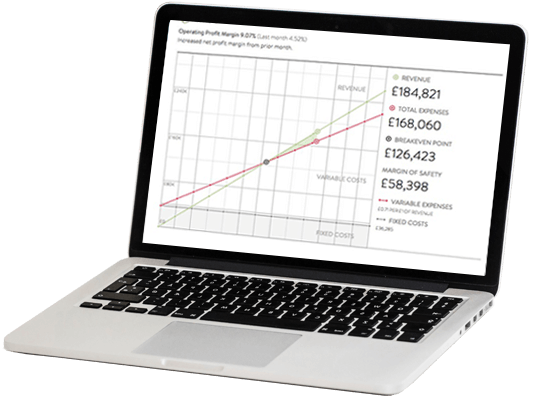
How Management Accounts Reveal Hidden ROI
Instead of relying on gut feel, we stress-tested the venue’s financials using robust forward-looking management accounts and cash flow forecasting. The analysis revealed two critical factors:
- Smoothing Seasonal Dip: The new venue targeted a different customer demographic, balancing out seasonal revenue fluctuations across the wider group.
- Clear Repayment Capacity: Projected footfall and gross margins demonstrated that debt servicing would be comfortably covered within the venue’s first quarter of trading.
Working alongside a specialist broker, we helped the client secure a £15,000 business loan paired with a £10,000 pre-agreed overdraft facility. Within 12 months, the fifth bar delivered outstanding financial results, transforming a seasonal cash gap into long-term equity growth.
Furthermore, maintaining structured, transparent communication with commercial lenders built long-term bank confidence, opening up pre-approved credit lines for future acquisitions.
What “Being in the Red” Signals About Your Cash Flow
To evaluate whether negative cash flow is a threat or an opportunity, you must understand what your numbers are telling you:
| Dangerous Cash Deficits | Strategic Working Capital Leverage |
|---|---|
| Funding operational losses without a recovery plan | Financing revenue-generating assets or inventory |
| Unplanned overdraft usage and unmonitored debts | Pre-agreed credit facilities aligned with forecasts |
| Inability to cover recurring payroll or tax liabilities | Temporary cash gaps caused by seasonal lead times |
| Reliance on annual accounts that look backwards | Real-time management reporting and rolling forecasts |
Make Informed Growth Decisions with MNE Accounting
Traditional accounting firms view success purely through the lens of cost minimisation. At MNE Accounting, our management accounting services help business owners evaluate risk, model capital investments, and seize market opportunities with confidence.
Whether you need dynamic rolling forecasts, monthly management dashboards, or expert guidance on working capital structure, our Leicester-based team is here to support your growth.
Want to turn your financial data into actionable growth strategies? Get in touch with MNE Accounting today or call 0116 255 2422 to speak with our management accountants.
Frequently Asked Questions About Management Accounting & Cash Flow
What is the difference between statutory accounting and management accounting?
Statutory accounting focuses on historical compliance—preparing annual accounts and tax returns for HMRC and Companies House after your financial year ends. Management accounting provides forward-looking, real-time monthly financial reports, cash flow forecasts, and KPI tracking to help business owners make active commercial decisions.
Is it safe for a small business to borrow money for expansion?
Borrowing for expansion is safe when backed by detailed cash flow forecasting and stress-tested financial modelling. If projected returns comfortably exceed loan repayments and interest costs, strategic leverage allows you to accelerate growth without diluting equity.
How can management accounts help prevent cash flow crises?
Management accounts track rolling cash flow, monitor debt-collection cycles, and highlight seasonal revenue dips months before they occur. This early visibility allows business owners to adjust overheads, negotiate credit lines, or arrange structured finance before cash reserves run low.